
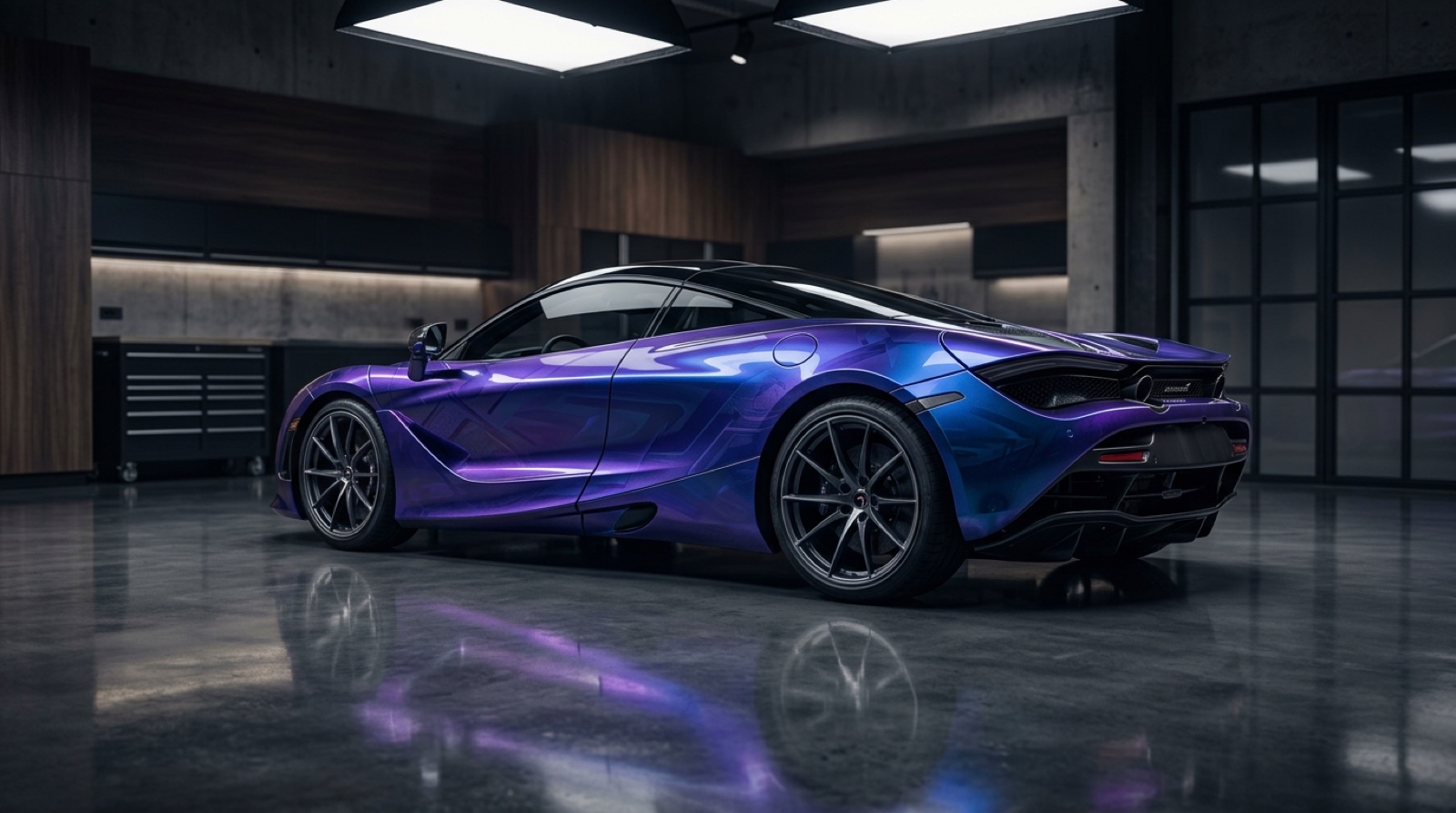
Yes, you can wrap a leased car. Vinyl is a reversible modification, and a professionally installed wrap comes off at the end of the term without touching the factory paint underneath.
That said, the answer comes with conditions. Your lease agreement, the quality of the install, and how long the wrap stays on all affect whether you hand the car back clean or with a bill attached.
A wrap is adhesive vinyl film applied over the existing paint. It is not permanent, and it does not alter any component of the vehicle.
Lease agreements almost always prohibit permanent alterations. Repainting a leased car, drilling holes, or swapping body panels falls squarely into that category. Vinyl does not.
When the lease ends, the film is heated and peeled off, the adhesive residue is cleaned, and the car returns to its original color. Done correctly, an inspector has no way to tell the wrap was ever there.
Vinyl shields the paint from UV exposure, rock chips, tree sap, and bird droppings. That matters in Louisiana, where summer sun and oak-lined streets do real damage to clear coat over a three year term.
Plenty of drivers finish a lease with paint in noticeably better shape than the cars parked next to them. That works in your favor at turn-in inspection.
Most agreements use broad language about modifications rather than naming vinyl specifically. That ambiguity is worth clearing up before you spend money.
Call your leasing company and ask directly whether a removable vinyl wrap is acceptable, provided the vehicle is returned to factory appearance. Get the answer in writing if you can.
| Modification | Lease Friendly? | Why |
|---|---|---|
| Vinyl wrap | Usually yes | Fully removable, paint stays original |
| Paint protection film | Usually yes | Removable, protects factory finish |
| Repaint | No | Permanent alteration to the vehicle |
| Vinyl over damaged paint | Risky | Removal can lift failing clear coat |
| Body kit or drilled accessories | No | Permanent structural changes |
Vinyl does not damage healthy factory paint. It can pull up paint that was already failing.
If the car has been resprayed after an accident, or if the clear coat is peeling or oxidized, removal becomes a gamble. Aftermarket paint often bonds poorly to the panel, and the adhesive can win that fight.
On a leased vehicle, this is rarely a problem since the car is new or nearly new. Still, any reputable shop should inspect the surface before quoting the job.
Low grade film uses aggressive adhesive and breaks down fast under heat. After two Gulf Coast summers it can bake on, tear into confetti during removal, and leave residue that takes hours to clean.
Quality cast vinyl from manufacturers like 3M and Avery Dennison is engineered to release cleanly. That difference matters far more on a lease than on a car you own outright.
Do not wait until the week before turn-in. Book removal at least a month out so there is room to address anything unexpected.
Most quality wraps are rated for five to seven years, which comfortably outlasts a typical 36 month lease. If you want to understand how climate affects that window, our breakdown of wrap lifespan in this climate covers it in detail.
Removal on a full wrap generally takes a few hours to a full day depending on the vehicle and how long the film has been on. Budget for it when you plan the original install.
The most common request is a straight color swap. A full color change lets you drive something that looks nothing like the stock trim you were stuck with at the dealership.
Others want something more specific to their vehicle, which is where a custom design build makes sense. Satin, matte, and gloss finishes all remove the same way.
If you would rather not commit the whole car, covering just the hood, roof, and mirrors gives a strong visual change at lower cost and shorter removal time. Blacking out badges and window trim with a chrome delete is another low commitment option that reverses cleanly.
Contractors, caterers, and service businesses across Metairie, Kenner, and Gretna lease their vans and trucks precisely because they turn over every few years. Branding those vehicles is one of the strongest arguments for vinyl over paint.
A branded work vehicle advertises for years, then strips back to plain white before it goes back to the leasing company. Businesses running multiple units handle it the same way through coordinated fleet graphics.
Wear charges at turn-in usually come from rock chips on the front end and door edges. Vinyl helps, but it is thin.
For high impact zones, clear paint protection film is the stronger option. It is also removable, and it absorbs the debris that Interstate 10 and the Causeway throw at your bumper every day.
Confirm the terms with your leasing company, then bring the vehicle in for a look. We will tell you honestly whether the paint is a good candidate and what removal will involve later.
Our shop on Rousseau Street handles installs and removals for drivers throughout the Greater New Orleans area. Reach out for a quote and we will walk you through the whole timeline.
Wrap It Now, Peel It Later
We install and remove wraps on leased vehicles across New Orleans, Metairie, Kenner, and Gretna.